Small family-style home vs. large facility
Choosing care for a loved one can feel heavy. This side-by-side guide explains how a small family-style home and a larger facility may differ, so your family can ask better questions and decide with more confidence.
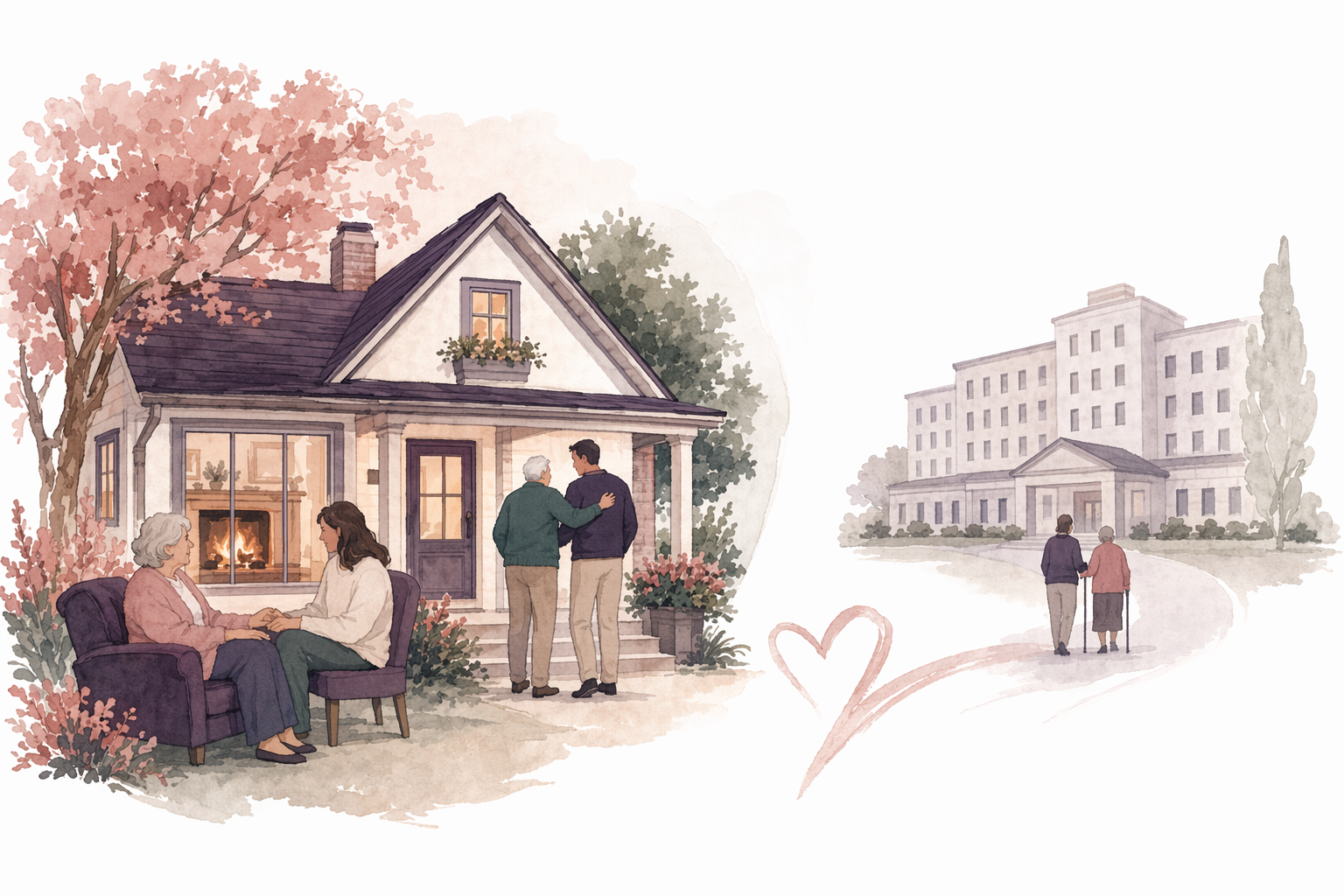
Two different settings, both worth looking at
Families often compare a small family-style residential home with a larger senior care facility. Both can be good options, depending on your loved one’s needs, personality, language, budget, and the type of daily support they may need.
A small family-style home may also be called an adult family home, adult foster care home, or board-and-care home. A larger facility might be an assisted living community or another residential setting with more residents and staff. The names, rules, licensing, and levels of care vary widely by state.
HearthRow is a free matching and information service. We help families find licensed homes and connect with options near them. We do not provide care, and we do not give medical, nursing, legal, or financial advice. It is always important to confirm a home’s current state license or certification yourself and tour in person before deciding.
How daily life may feel different
The biggest difference is often the size and pace of daily life. In a small family-style home, there are usually fewer residents. That can mean a quieter setting, more familiar faces, and a routine that feels closer to living in a house than living in an institution. For some families, that feels more personal and comforting.
In a larger facility, there may be more activity, more shared spaces, and a wider calendar of events. Some people enjoy having many neighbors, organized programs, and more chances to join group activities. Others may find a busy setting tiring or confusing.
A small home may be especially appealing if your loved one values calm, simple routines, home-cooked meals, or caregivers who know their habits well. A larger facility may be a better fit for someone who likes a bigger social environment or wants more built-in amenities.
Neither setting is automatically better. The right choice depends on the person, not just the building.
Staffing, attention, and care needs
Families often ask whether a small home gives more personal attention. Sometimes it does, because there are fewer residents and caregivers may know each person very closely. But that is not something to assume. Staffing patterns, training, overnight coverage, and what help the home can provide all vary by state and by home.
A larger facility may have more staff roles, such as activity staff, front-desk staff, or a larger care team. But a bigger staff does not always mean more one-on-one attention. What matters is how care is actually delivered day to day.
Ask practical questions in either setting:
- What help do residents receive with bathing, dressing, toileting, walking, and meals?
- Who is on site during the day, evening, and overnight?
- What happens if a resident’s needs change?
- Are outside medical providers allowed to visit?
- What tasks can the home legally provide in this state?
Because rules differ widely, confirm details directly with the home, your loved one’s doctor, and your state’s licensing agency. Do not rely only on a brochure or website.
Cost, payment, and Medicaid
Cost is one of the hardest parts of this decision. In many states, a small family-style home may charge a monthly amount that includes room, meals, supervision, and help with daily living. A larger facility may have a base monthly rate plus added charges for different levels of support. But there is no single price that applies everywhere.
Typical estimates vary a lot by state, location, room type, and care needs. In general, room-and-board is usually paid privately. Medicaid waivers often help with the personal-care part for eligible people, but not always the housing part. Rules and programs vary widely by state.
If Medicaid may be part of your plan, it is best to ask your state Medicaid office or a local benefits counselor how coverage works where you live. That information is separate from getting matched to homes. You can also read more in our general guide to care home costs.
When comparing options, ask for a written list of what is included, what may cost extra, how rate increases are handled, and whether a deposit or community fee applies. These are typical planning questions, not quotes. Always confirm directly with the home.
Language, food, culture, and comfort
For many families, especially immigrants and non-native English speakers, comfort is not only about care tasks. It is also about language, food, faith, daily habits, and feeling understood. A small family-style home may sometimes offer a closer cultural match, such as familiar meals or a caregiver who speaks the resident’s language. That can make everyday life feel more dignified and less lonely.
A larger facility may also offer strong community life, but the environment may feel less personal for some residents. On the other hand, it may have more formal activity schedules, more transportation options, or a bigger group of residents from different backgrounds.
When you tour, notice small things. Does the staff speak respectfully to residents? Does the food look familiar and appetizing? Is the home calm, clean, and welcoming? Can your loved one imagine living there, not just being cared for there?
These details matter. The best fit is often the place where your loved one seems more at ease.
How to compare wisely before you decide
Try not to choose based on size alone. A wonderful small home and a wonderful large facility can both exist. So can poor-quality options in either category. The safest approach is to compare a few places carefully.
Before deciding:
- Confirm the home’s current state license or certification yourself.
- Tour in person if possible, and visit at different times of day.
- Ask for the resident agreement and fee list in writing.
- Observe how staff interact with residents.
- Ask what happens if care needs increase.
- Check whether the setting feels right for your loved one’s personality and routine.
If you want help narrowing your search, HearthRow can help you get matched with licensed adult family homes near you at no cost to your family. Some homes pay HearthRow a flat fee when we connect them with a family. It never changes what you pay, and you are never under any obligation.
This is a big decision, and it is okay to take your time. Use tours, questions, and your own observations. Then confirm the final details directly with the home, your loved one’s doctor, and the state agency that oversees licensing.
Small homes and large facilities can both be good choices, but you should compare the real day-to-day feel, costs, and licensing of each place before deciding.