Adult family home vs. nursing home
Choosing care for a loved one can feel heavy. This side-by-side guide explains the basic differences between an adult family home and a nursing home, so your family can ask better questions and decide what fits best.
Start with the biggest difference
An adult family home is a small, family-style residential home where a limited number of adults live and receive help with daily needs. Depending on the state, you may also hear terms like adult foster care home or board-and-care home. These homes are licensed or certified by the state, but the rules, size limits, and services vary widely by state.
A nursing home is usually a larger facility with more staff, more residents, and a higher level of medical and nursing support on site. Nursing homes are often designed for people who need ongoing skilled nursing care, regular medical monitoring, or rehabilitation after a hospital stay.
Neither setting is automatically "better." The right choice depends on the person's daily needs, comfort level, budget, language needs, and how important a small home setting is to your family.
How daily life often feels in each setting
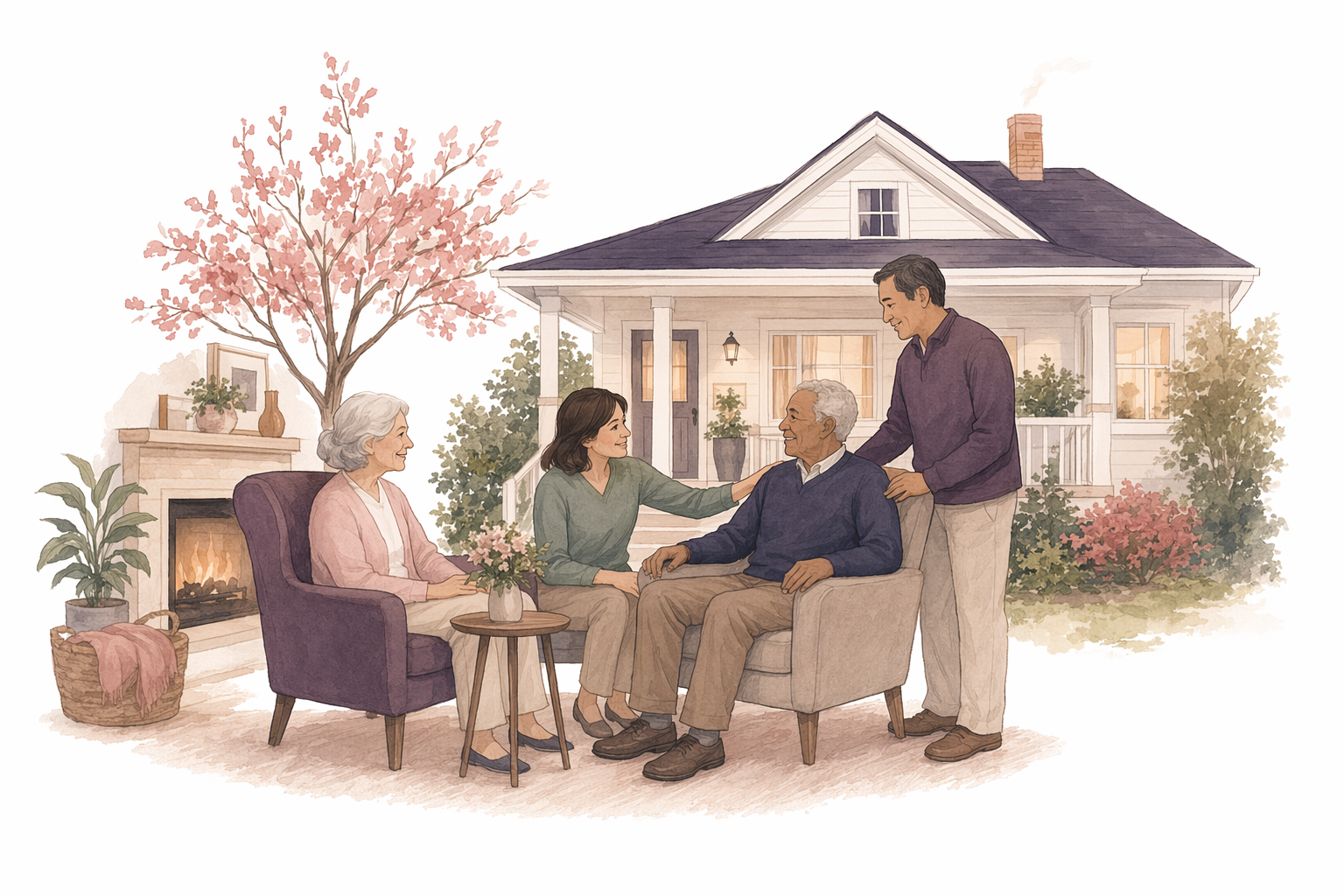
Many families look at an adult family home because they want a quieter setting. These homes are usually smaller, so residents may get more familiar faces, a calmer routine, and a more home-like environment. For some older adults or disabled adults, that can feel less overwhelming.
A nursing home usually has more structure, more residents, and more shared systems. That can mean easier access to nurses, therapy, and medical oversight, but it may also feel more institutional to some families. Some people do well with that structure. Others prefer a setting that feels more like a household.
When you tour, pay attention to simple things:
- Does the person seem comfortable in this setting?
- Is the home quiet or busy?
- Do staff speak the resident's language, if that matters?
- Do meals, routines, and sleeping schedules feel respectful?
- Does the home support privacy and dignity?
A tour matters because brochures cannot show how a place really feels day to day.
What kind of care each one may be able to provide
Adult family homes often help with daily living, such as bathing, dressing, meals, mobility, medication reminders or assistance, and supervision. Some homes can support residents with memory needs or chronic conditions, while others cannot. This depends on the home's license, staff training, and state rules.
Nursing homes are generally for people who need a higher level of hands-on nursing care or regular medical attention. They may be a better fit for someone who needs frequent skilled nursing services, rehabilitation, wound care, or close medical monitoring.
This is where families need to ask very direct questions. Do not assume a small home can provide the same support as a nursing home. Also do not assume every nursing home offers the same level of specialty care. Always confirm the home's current state license or certification, ask what services it can legally provide, and check with the person's doctor about what level of care may be appropriate.
Cost: what families usually pay
Costs vary a lot by state, location, and level of help needed. In many adult family homes, the monthly charge is a private-pay room-and-board amount plus any added care costs, if allowed under state rules. A typical private-pay estimate may range from a few thousand dollars per month to more in higher-cost areas, but that is not a quote.
Nursing homes are often more expensive because they provide a higher level of staffing and medical support. Private-pay costs can be much higher than a small residential home, especially for semi-private or private rooms. Again, these are typical ranges only, not guarantees.
Medicaid rules are different in each state. In many states, Medicaid waivers may help pay for the personal-care portion in some adult family homes, while room and board is often still paid privately. Nursing home Medicaid coverage works under different rules and may cover long-term nursing home care for people who qualify. Because this is complicated and state-specific, confirm details directly with your state's Medicaid office, the home, and your doctor. You can also read more general information on our costs page.
HearthRow does not set prices, quote benefits, or decide eligibility. We share general information and help families find licensed homes to contact.
Questions that can help you choose
If your family is deciding between an adult family home and a nursing home, it helps to compare the same topics side by side. Ask each place what help they provide every day, what they cannot provide, who is on site overnight, and how they handle changes in a resident's condition.
You may also want to ask:
- How many residents live here?
- What training do caregivers have?
- Is a nurse involved, and how often?
- Can this setting support mobility needs safely?
- What languages do staff speak?
- How are meals, bathing, and medications handled?
- What is included in the monthly cost, and what costs extra?
- What happens if the resident needs more care later?
For many families, culture and language matter just as much as the care checklist. A small home may be easier for a loved one who wants familiar food, a quieter routine, or caregivers who understand their language and customs.
If you want help finding licensed adult family homes to compare in your area, we can help you find options. HearthRow is a free matching and information service. Some homes pay HearthRow a flat fee when we connect them with a family. It never changes what you pay, and you are never under any obligation.
When one setting may fit better than the other
An adult family home may be worth exploring if your loved one would benefit from a smaller setting, more familiar routines, and help with daily living in a residential home. It can be a good option for families who want a personal, home-like environment and are comfortable confirming exactly what the home can provide.
A nursing home may fit better if the person needs ongoing skilled nursing care, frequent medical attention, or rehabilitation services that a small residential home may not be licensed or staffed to provide.
Sometimes families start in one setting and later need another. Needs can change. That is why it is important to ask not only what a home can do today, but also what happens if care needs increase.
Wherever you start, always verify the home's current state license or certification yourself and tour before making a decision. You can also learn more about how HearthRow works on our services page.
Adult family homes are smaller and more home-like, while nursing homes usually provide more medical and nursing support, so the best choice depends on the person's needs and the home's license.