Adult foster care vs. a nursing home
Choosing care for a parent, spouse, or disabled adult can feel heavy. This guide explains how a small adult foster care home differs from a nursing home, so you can ask better questions and choose with more confidence.
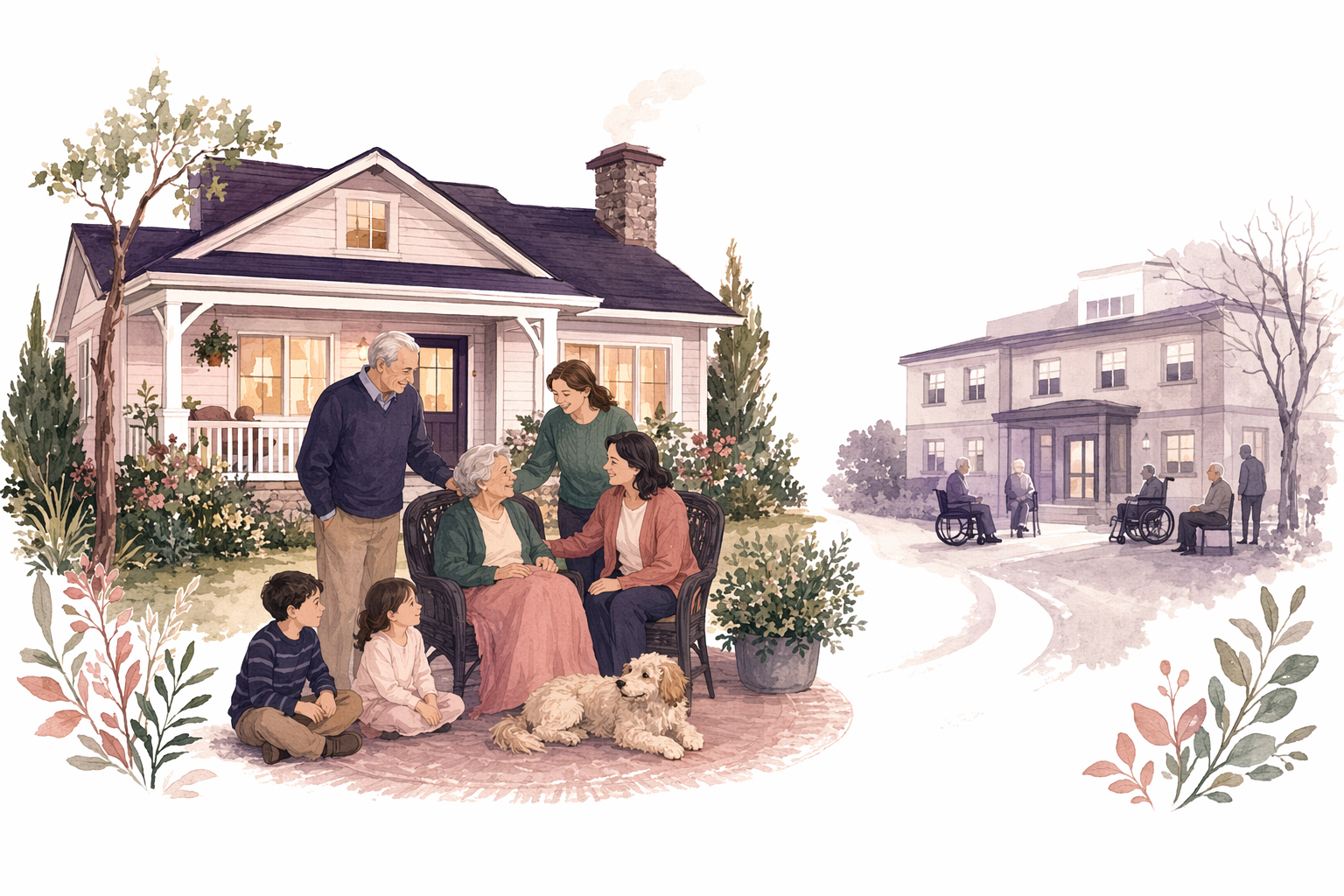
Two very different settings
Adult foster care is a small, family-style home where a person lives with support for daily life. In many states, these homes are also called adult family homes, board-and-care homes, or similar names. They are usually licensed or certified by the state, but the rules and names vary widely by state.
A nursing home is usually a larger facility that provides a higher level of medical and nursing oversight. Nursing homes are often designed for people who need ongoing skilled nursing, rehabilitation, or close medical monitoring.
Neither setting is "better" for every person. The right fit depends on the person’s daily needs, safety needs, preferences, and budget. HearthRow is a free matching and information service. We help families find and connect with licensed adult family homes near them, but we do not provide care or medical advice.
What adult foster care is usually like
An adult foster care home is often chosen by families who want a smaller setting and a more home-like routine. Many homes have only a handful of residents. That can mean quieter days, familiar caregivers, and a setting that feels less institutional.
Support in these homes often includes help with daily activities such as meals, bathing, dressing, walking, reminders, laundry, and social connection. Some homes can also help coordinate with outside medical providers, but they are not all set up for the same level of care.
Because these homes are small, the daily experience can feel more personal. At the same time, services, staffing, training, and allowed care tasks vary by state and by home. Always confirm what a specific home can and cannot do.
If you want help understanding the kinds of help homes may offer, see services.
What a nursing home is usually like
A nursing home is generally for people who need more medical support than a small residential home can provide. This may include skilled nursing care, rehab after a hospital stay, wound care, or ongoing monitoring by licensed nursing staff.
Nursing homes are usually larger and more structured. They may have shared rooms, scheduled therapies, and a stronger clinical focus. For some people, that level of medical support is necessary and appropriate.
If your loved one has complex medical needs, recent hospitalizations, or needs round-the-clock nursing attention, ask their doctor what type of setting is appropriate. HearthRow can share general information about adult family homes, but families should confirm care needs with the home, the person’s doctor, and the state licensing agency.
How to think about cost
Cost is one of the hardest parts of this decision. In adult foster care, room-and-board is usually paid privately. In some states, Medicaid waivers may help with the personal-care portion for people who qualify, but this varies by state and program. Medicaid rules are separate from HearthRow, and families should confirm eligibility and coverage directly with their state Medicaid office.
Nursing home costs are often structured differently, especially when skilled nursing or rehabilitation is involved. Coverage may depend on the reason for care, the person’s insurance, Medicaid status, or other programs.
There is no one price that fits every home. Costs vary by state, level of help needed, room type, and services included. Any figure you see online should be treated as a typical estimate, not a quote. You can learn more on our costs page.
Questions that help families decide
When families compare adult foster care and a nursing home, it helps to focus on daily life and safety, not just labels. A small home may be a good fit if the person wants a quieter setting, more familiar faces, and help with daily living in a residential environment. A nursing home may be a better fit if the person needs ongoing skilled nursing or more complex medical oversight.
Ask practical questions like:
- What daily help does the person need right now?
- Has a doctor said the person needs skilled nursing or rehab?
- Does the person do better in a small, quiet home or a larger clinical setting?
- What is included in the monthly cost?
- What happens if needs increase later?
Whatever you choose, always confirm the home’s current state license or certification yourself. Tour the home in person if you can. Notice how staff speak to residents, how clean the home feels, whether meals look appropriate, and whether residents seem comfortable and treated with dignity.
How HearthRow can help
Many families feel overwhelmed at the start. That is normal. We help you find and connect with licensed adult family homes near you, at no cost to your family. We are not a care home, medical provider, or government agency, and we do not decide what level of care a person needs.
If you want help exploring small, licensed homes, you can get matched. We only need basic contact and location information so we can help you start the search. Please do not send medical history, diagnoses, financial account numbers, or sensitive records.
Some homes pay HearthRow a flat fee when we connect them with a family. It never changes what you pay, and you are never under any obligation. No match or connection is a guarantee of availability, acceptance, price, or fit. Families should always confirm details directly with the home and tour before making a decision.
Adult foster care is usually a small, home-like setting for daily support, while a nursing home usually provides more medical and nursing care.